Share this post
Content Solutions
5-min read
Responsible tourism for accommodation providers: why your journey is worth sharing at every stage
By
Gwenydd Jones
Published
23 June 2026
An important question is arriving in inboxes and being discussed across the African travel trade. Agents are asking it. DMCs are asking it. Buyers in European source markets are asking it with increasing urgency: what’s your property doing for the environment and the communities around it?
The encouraging thing is that most accommodation providers have had a meaningful answer for a long time. Solar panels on the roof. Water being recycled and reused. Staff from the local community. Land managed for conservation. Years of genuine effort that define how they operate as a sustainable property every single day.
What’s frustrating though is that many of those providers say little-to-nothing about it.
Why good work often goes unspoken
The reasons why accommodation providers don't shine the spotlight on their sustainability efforts are complex.
Worries about scrutiny over partial progress
Research focused on hotels in the UK, published in The Conversation by academics from the Universities of Portsmouth and Bath, found that many hospitality businesses deliberately underreport their sustainability practices. This is because they’re concerned that partial progress invites scrutiny rather than credit. Their study found that 62% of hotel websites carry no sustainability information at all, with only 2% of social media posts referencing it.
If that’s what’s happening in Europe, where regulations are among the most stringent in the world, what does the situation look like in the African tourism sector?
Meaningful work in Africa stays invisible
In African tourism, the gap between what suppliers do and what they feel able to say is often wider still. Many international certification frameworks are built around regulatory and legislative contexts that simply don’t translate to the African market. As Lianne Goldring of Mahlatini Luxury Travel noted in Travel Weekly when reflecting on the company’s B Corp journey: “a lot of what we were doing, particularly in conservation and sustainability, we actually ended up achieving no points for, purely because the legislation, government policy, and required paperwork didn’t meet their stringent standards.” Meaningful work that achieves environmental impact, done quietly, and invisible to the buyers who need to see it.
The fear of not living up to regulatory standards for sustainable tourism is understandable. But the cost of staying silent is growing. In a trade where sustainability compliance is increasingly required for market access, particularly in European source markets, an absence of information stops being neutral. It becomes a gap that buyers notice.
This is particularly sad when, by anyone’s standards, you’re doing good work in the world.
What the trade needs from you
When it comes to sustainable travel, buyers value visibility and honesty. When an operator or DMC wants to demonstrate the responsible tourism credentials of their supply chain to an overseas client, they need something concrete to work with. A documented position, however partial, is far more useful than nothing.
This is what tour operators tell us they look for in travel suppliers. They need some type of evidence that a supplier is on the sustainability journey and willing to share it. Specifically, buyers want to know:
- what your energy and water practices are;
- whether you have a community engagement or employment programme;
- how you approach biodiversity and conservation;
- whether you’re working towards sustainable tourism certification, or already hold it;
- what steps you’re taking, even if the work is uncertified or still in progress.
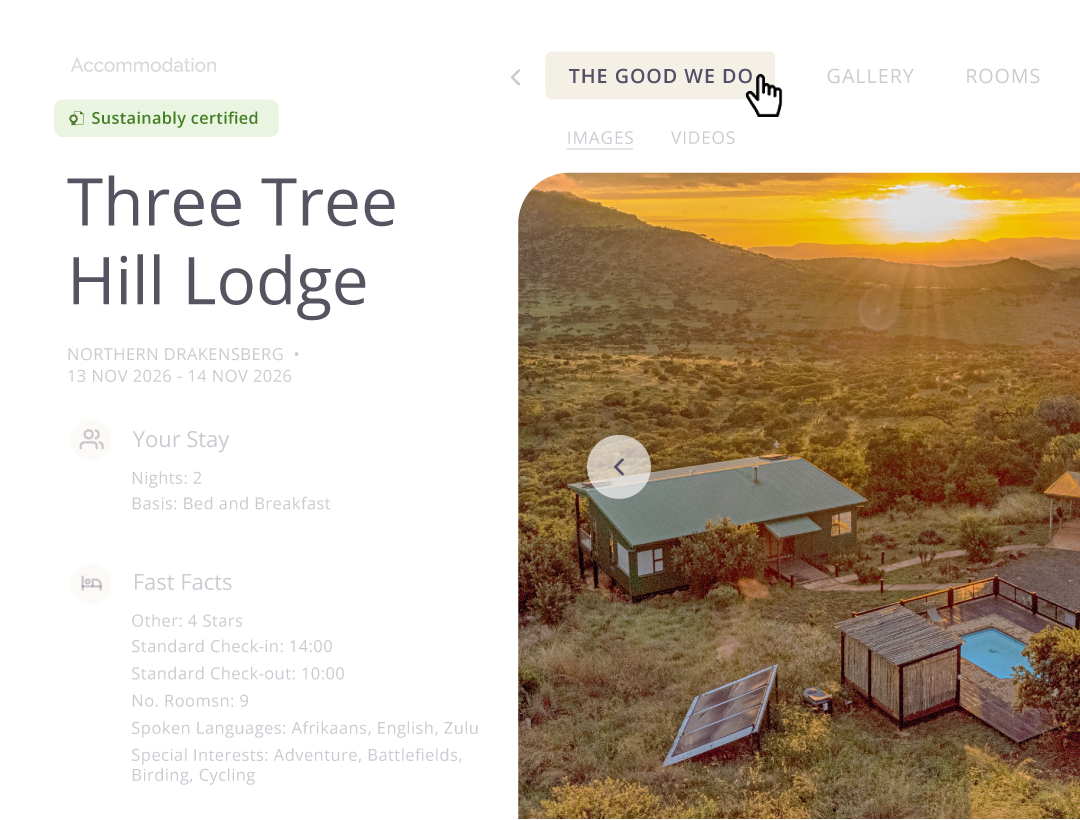
A well-maintained Wetu profile is where that information lives, but the Sustainability Profile takes it one step further. By completing your Sustainability Profile, you can standardise what you share so that buyers across the trade can find it, understand it, and use it.
And the best thing about this is that you can share your responsible tourism practices even without official certification.
Three suppliers already sharing their story
Across the Wetu platform, a growing number of African accommodation providers have taken the step of completing their Wetu Sustainability Profile. We’re highlighting three of their stories in this article for inspiration to help you figure out how you want to share your sustainability journey.
Gondwana Collection Namibia
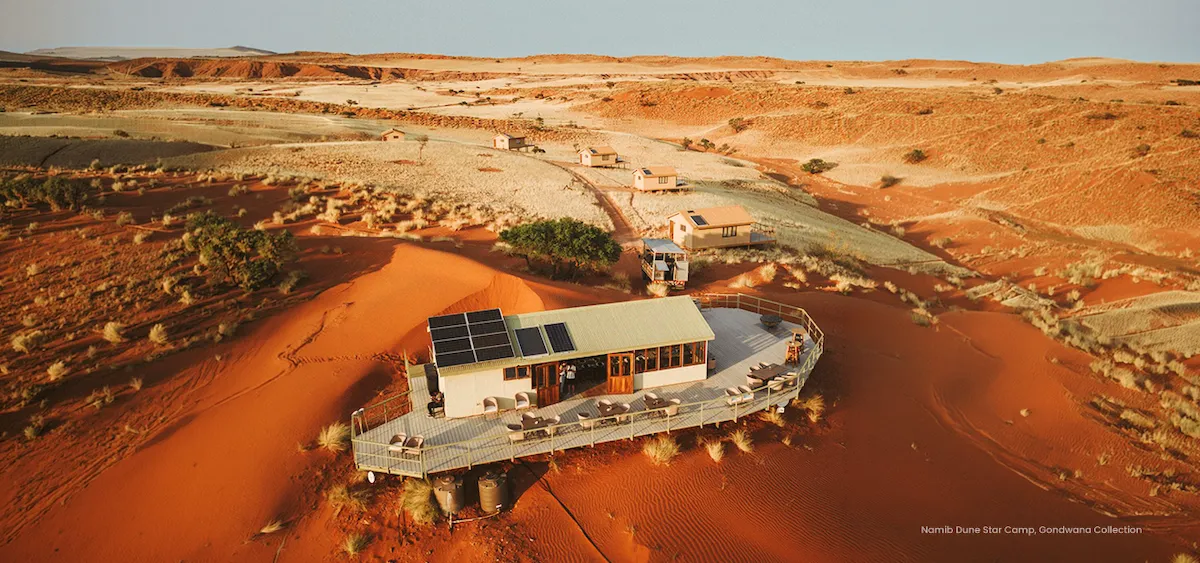
With over 20 properties across Namibia, Gondwana Collection has built a sustainability programme that operates at genuine scale. Solar energy powers 95% of its lodges. Wastewater treatment plants serve 90% of its properties. The company manages over 7,400 km² of conservation land and funds community development through the Gondwana Care Trust. More than 30 of its properties now have a completed Sustainability Profile on Wetu, making three decades of responsible tourism practice visible to the trade in one standardised place.
Tanda Tula Safari Camp
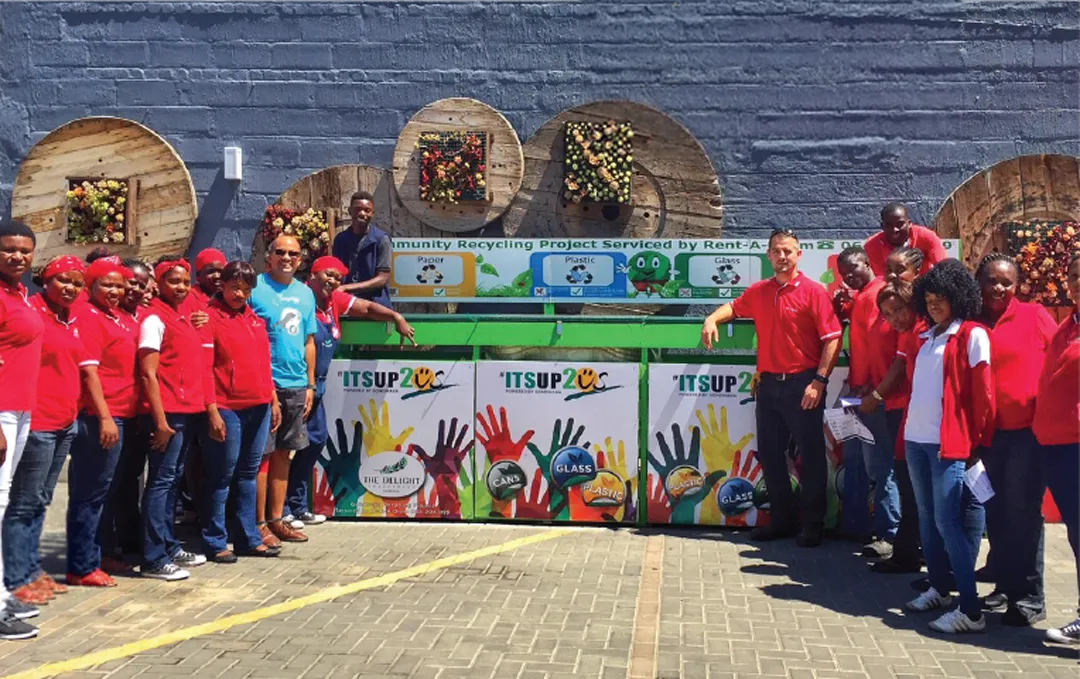
Tanda Tula is a family-owned camp in the Timbavati Private Nature Reserve bordering Kruger National Park. Every suite runs on solar energy with water-wise systems throughout, and the camp is part of the Fair Trade Tourism network. Through the Tanda Tula Foundation, guest stays contribute directly to education, healthcare, community development, and the conservation of over 55,000 ha of wilderness. That commitment now has a home on Wetu, where trade partners can find it alongside everything else they need to build a great itinerary.

Nkuringo Gorilla Lodge
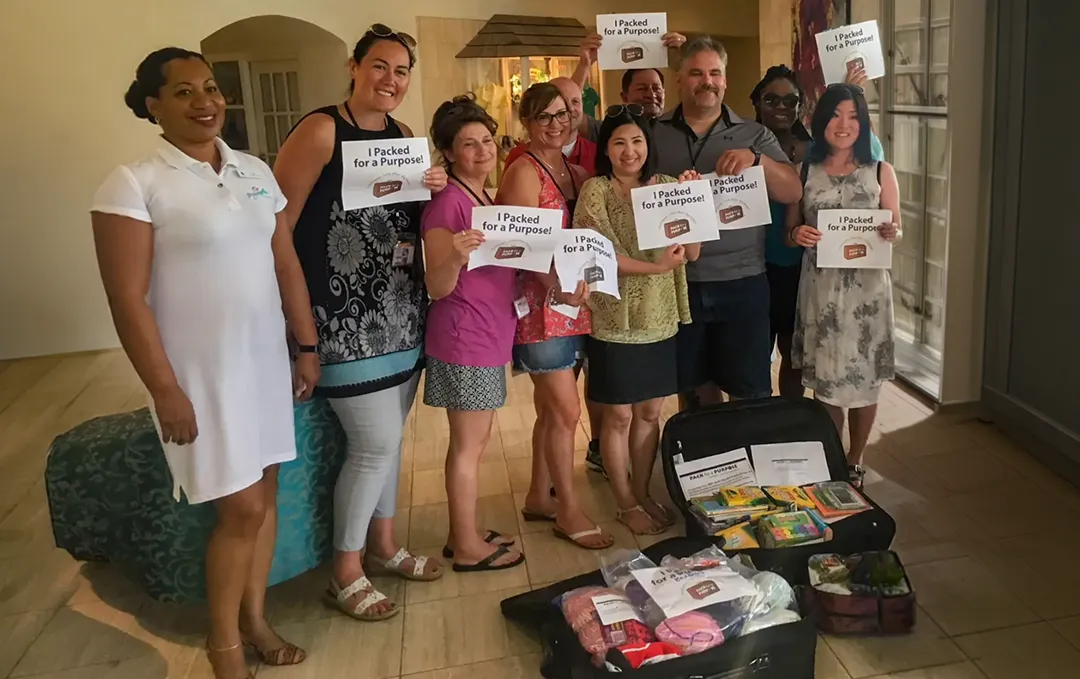
Nkuringo Gorilla Lodge sits on the southern rim of Uganda’s Bwindi Impenetrable Forest, an owner-operated camp that runs on solar power, collects rainwater from its roofs, and keeps single-use plastic out of the guest experience. Every stay includes a $10 per person per night contribution to the Gorilla Junction Foundation, which funds skills training, community livelihoods, and conservation programmes in the communities surrounding the forest. For buyers building responsible gorilla trekking experiences in East Africa, that story is now documented and accessible through the Wetu Sustainability Profile.
Start where you are
The Wetu Sustainability Profile has been designed in collaboration with certification bodies for properties at every stage of the responsible tourism journey. It’s a self-declared, standardised questionnaire covering the areas buyers most commonly ask about: energy, water, waste, community, and biodiversity.
It takes around 45 to 60 minutes to complete. You don’t have to upload heaps of documents or get third-party verification. There’s an option to note if you hold certification or are working towards it, but the profile is equally valid and useful for tourism businesses at the very beginning of their sustainability journey. If you haven’t started implementing a sustainable accommodation project yet, you can still complete your profile, because even a clear statement of your current position is more useful to a buyer than nothing.
The Sustainability Profile isn’t an attempt to replace certification. Instead, it sits alongside or even ahead of it, for the many businesses doing meaningful work they haven’t yet formalised. You complete it just once, then every trade partner accessing your content on Wetu can see it. No repeated questionnaires, no email requests, no duplication.
If you want to strengthen the content of your profile alongside this, our guides to revamping your product descriptions and using video marketing are useful starting points.
Your story is already happening
Every lodge that manages its energy thoughtfully, supports the community around it, or protects the land it sits on is already on a sustainability journey. The only question is whether this journey is visible to the world.
If it isn’t, the trade is making decisions about your property with incomplete information. Without a doubt, that’s a gap worth closing.
If you’re already a Wetu client, log in to your account and create your Sustainability Profile to make your story part of the responsible tourism conversation. Not a client yet? Start with your Wetu free listing.
Wetu Sustainability Profile FAQ
Below are the answers to some frequently asked questions about the Wetu Sustainability Profile.
Is the Sustainability Profile different to the main Wetu Profile?
No, the Sustainability Profile is a section inside your main supplier profile on Wetu. The two aren’t separate from each other.
Is the Wetu Sustainability Profile available to suppliers with core listings?
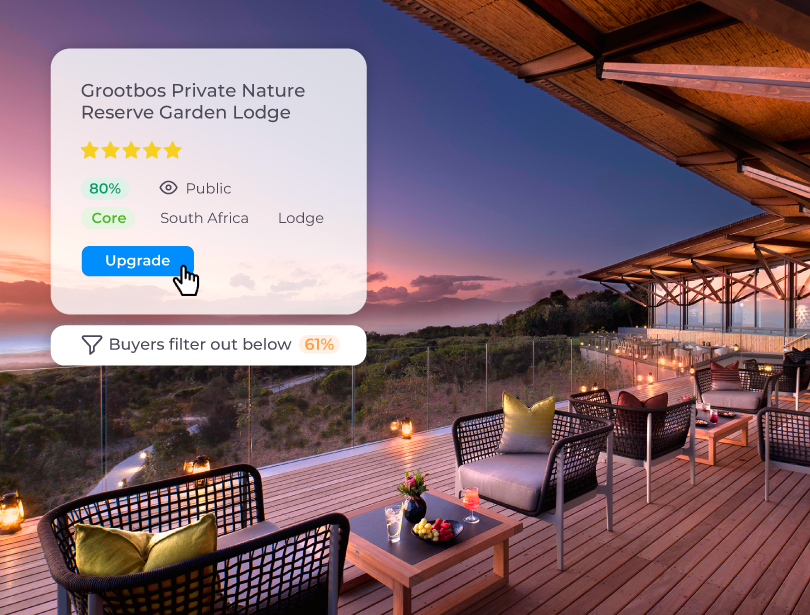
If you’re an accommodation supplier with a free Wetu Core Profile, you can complete your Sustainability Profile, but you’ll need to upgrade to a Professional Profile to be able to share it with buyers and operators. This is because buyers will view your Sustainability Profile via your iBrochure, which is a premium feature.
I’m a buyer. Why can’t I see a supplier’s Sustainability Profile?
Accommodation suppliers share their sustainability information via the iBrochure, which is a premium feature. If you’re looking for a supplier’s Sustainability Profile and can’t see it, this is probably because the supplier has a Core Profile, which means they can't publish iBrochures.
Content Solutions

Blog
Keep the inspiration flowing
Explore related stories, tips, and updates to help you bring magic to your clients.
.png)